Watch a demo
Battery Storage in Africa: From Backup to Backbone
See why Africa is prioritizing off-grid battery storage that operates independently, as 50% of its population doesn’t have access to a stable power supply.



Martín Rimblas
Strategic Account Executive Sub-Saharan Africa
Strategic Account Executive at RatedPower with expertise in the Sub-Saharan African market. Background in international trade and investment advisory, sales development, and corporate auditing, with strong experience in client relationship management and business expansion across diverse regions.

Content
Almost half of Africa’s population (over 600 million people) still lives outside the reach of a stable power supply. Even in cities, blackouts are routine: the average home in Lagos receives only seven hours of grid electricity per day and has to depend on diesel generators, if the residents can afford them.
The continent’s population and energy use are growing too fast for its aging infrastructure. Electricity demand is on course to quadruple by 2050 (faster than anywhere else in the world), but many grids in many countries are poorly maintained and in need of updating.
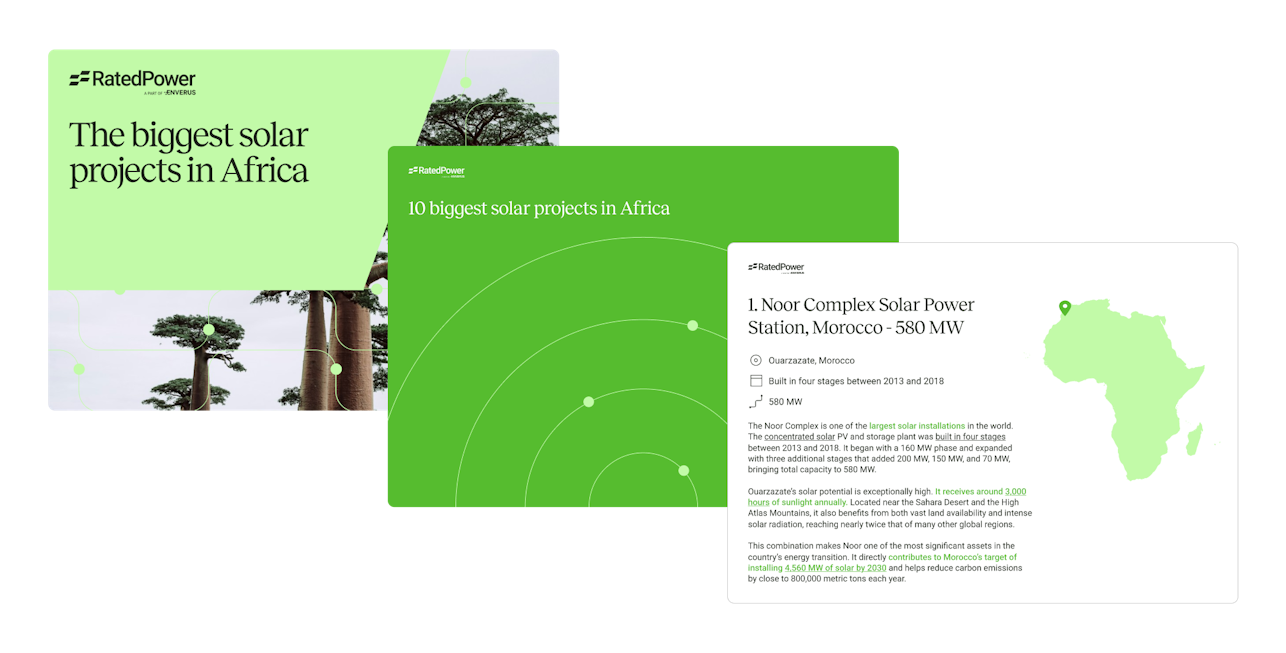
Download our e-book: The biggest solar projects in Africa and upcoming developments. Discover how the continent will add 23 GW of new solar capacity by 2028, doubling today’s total and transforming its energy landscape

Many communities are situated far from existing power lines, and there is simply no funding to reach them with new transmission corridors. And where grids do exist, they’re often unreliable because of a surge in tampered meters and illegal connections that can blow transformers and knock out power for entire neighborhoods.
Analysts warn that expanding the system as it is won’t solve the problem. Instead, Africa should prioritize off-grid, battery-backed solutions that can operate independently until universal access is possible.
What is the state of African grids?
Many utility companies on the continent are still relying on analog systems that cannot provide real-time data on asset conditions or customer usage. Without digital visibility, there’s no way for them to manage outages or even to collect revenue efficiently.
The problem is especially challenging in Nigeria. The country has 12 GW of installed capacity, but only a quarter is usable. Unfortunately, nearly half of its distributed power is lost to unbilled or unpaid consumption, amounting to around NGN 100 billion per year. Studies suggest that if those losses were eliminated, utilities could multiply their revenue by eight without building a single new plant.
It’s a similar story across much of sub-Saharan Africa, where only 16 of 70 utilities cover their operating costs. The remaining 54 companies often can’t afford to maintain (much less upgrade) their networks, creating a cycle of underinvestment that may take decades to reverse.
Not surprisingly, five countries in the region (Nigeria, DRC, Ethiopia, Tanzania, and Uganda) account for nearly half of Africa’s unelectrified population. In Nigeria, 86 million people have to rely on candles or generators after dark, even in areas that are technically connected to the grid.
Building long-distance transmission lines to reach these communities is a sizable project that will take time. That’s why industry analysts are pushing for off-grid solar, which is faster and cheaper to deploy. Reports indicate that it’s the most affordable path to power for 398 million people worldwide, and may very well be the only option for countries like South Sudan, Niger, and Somalia.
To further strengthen energy access, these off-grid systems need BESS to convert daytime sunlight into round-the-clock power.

What is the current state of BESS in Africa?
Early-stage investments are concentrated in a handful of countries, but overall, Africa’s BESS market is growing by 22% every year. Demand is tracking toward 83 GWh. Around 2,902 MWh of battery systems are already running existing renewable energy projects across the continent.
Load shedding and power outages remain a defining feature of electricity supply across parts of Africa, reflecting systems under pressure from rising demand, hydrological variability, and constrained transmission networks. Recent power rationing has affected countries including Kenya, Nigeria, Zambia, Cameroon, Rwanda, and Malawi, where utilities have reported shortfalls, grid instability, or regional transmission challenges leading to scheduled or prolonged outages.
At the same time, South Africa offers a more optimistic signal: Eskom has reported more than 100 consecutive days without load shedding, underpinned by improved plant performance and system availability, demonstrating that reliability gains are achievable with the right operational and investment focus. This contrast highlights a continent in transition, where reliability challenges coexist with tangible progress and learning opportunities.
Against this backdrop, mini‑grids and battery energy storage systems are increasingly seen as practical, scalable tools to stabilize supply, reduce exposure to outages, and build more resilient power systems where the central grid alone cannot yet keep pace.
Mini grids lead the way
Mini-grids now account for 40% of installed capacity, powering mining operations, commercial users, and rural communities, especially in West and Southern Africa. Most of these systems fall in the 10-20 MWh range, large enough to support round-the-clock use in underserved areas.
Storage is also becoming part of daily life. Small businesses and industrial facilities are actively installing stationary batteries to stay operational during routine power cuts. In many regions, these systems have become the most dependable way to maintain refrigeration and other essential equipment through frequent outages.
Large projects push BESS into utility-grade territory
South Africa’s 153 MW/612 MWh Red Sands BESS has reached commercial close. Located in the Northern Cape, it’s designed to free up capacity on constrained corridors and help the national operator cover high‑demand hours. In addition, it will inject or absorb reactive power to regulate voltage levels across the transmission network, preventing equipment damage and reducing the risk of outages.

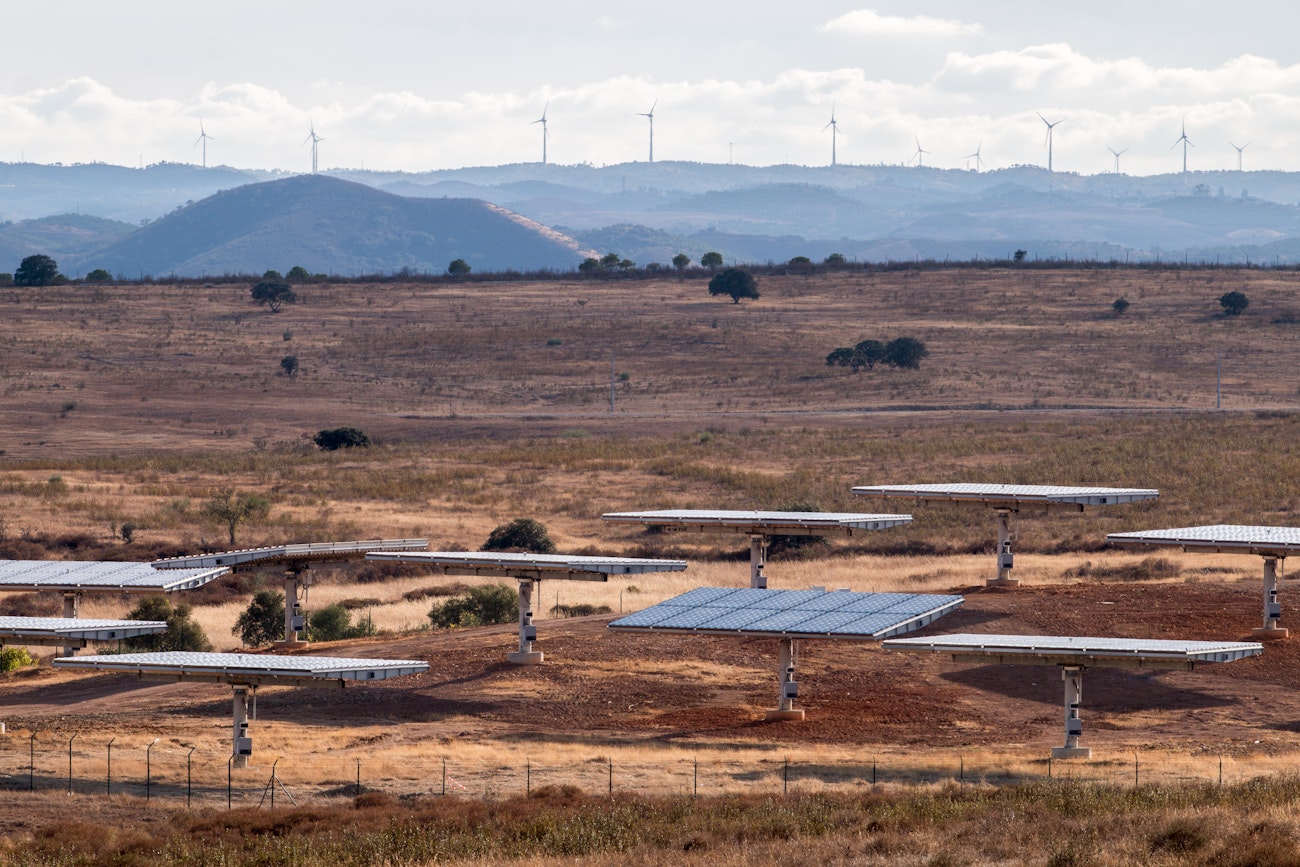
Elsewhere on the continent, roughly 18 GWh of storage projects are now in development:
AMEA Power is building Egypt’s first utility‑scale standalone storage systems, targeting around 1,500 MWh. Scatec is also constructing a combined 1.1 GW solar plant with a 100 MW/200 MWh BESS component.
In Morocco, multiple solar‑plus‑storage developments are underway. They should add an estimated 1,200 MWh of battery capacity once online.
A newly approved project in Uganda pairs a 100 MWp solar plant with a 250 MWh storage system.
And in Mauritius, many solar farms on isolated islands are starting to hybridize to fill shortfalls and reduce their dependence on imported diesel for backup.
What’s next for BESS in Africa?
Africa certainly has the natural resources to build domestic battery capacity and even compete in the global storage economy.
Some of the foundational materials used in the BESS industry come from some of the continent’s most under-electrified countries.
The Democratic Republic of Congo supplies most of the world’s cobalt, while Southern and Eastern Africa, as a geographic cluster hold substantial lithium reserves. Because of this resource base, African markets have something most growth regions lack: the potential to control key inputs.
Costs are also moving in the right direction. Lithium battery prices dropped 20% last year, lowering the barrier for utilities, manufacturers, and private users. In South Africa and Nigeria, local companies like Megamillion and PAM Africa are assembling and distributing more battery-backed systems than ever before to respond to surging demand.
Financing arrives sporadically, and interconnection issues still delay commissioning timelines by years, but things are looking up. Utilities are adding grid capacity and automation to reduce interconnection delays. Smart systems are being installed to manage loads and cut outages. On the financing side, new credit tools are helping SMEs afford solar-plus-storage installations that would have been out of reach just a few years ago. Industry groups are also pushing to remove administrative friction and keep capital flowing toward viable projects.
Latest stories
Related posts
Market analysis
Curtailment and compensation: Can batteries balance Brazil’s energy equation?
Explore how Brazil’s transmission bottlenecks are driving rising curtailment, creating revenue loss and financing risk for renewable projects and why utility-scale energy storage will be critical to minimizing waste and unlocking value as the grid evolves.
Updated 31 MAR, 26


Market analysis
From Loi Grémillet to PPE3: What France’s energy shift means for solar
Discover how the Grémillet bill reshaped France’s energy debate, and how the final PPE3 decree now defines the roadmap for solar and renewables through 2035.
Updated 17 MAR, 26


Market analysis
A look at the largest-scale solar projects across the UK
Find out more about how the UK is developing substantial solar power projects, including the Queequeg Renewables Solar PV Park and the Botley West Solar Farm.
Updated 24 FEB, 26