Watch a demo
Curtailment and compensation: Can batteries balance Brazil’s energy equation?
Explore how Brazil’s transmission bottlenecks are driving rising curtailment, creating revenue loss and financing risk for renewable projects and why utility-scale energy storage will be critical to minimizing waste and unlocking value as the grid evolves.



Jessica Nunes
Account Executive
I’m passionate about technology and the impact it can generate in business. Throughout my career in sales, I have developed a strategic market vision, specializing in negotiation, deal closing, and building strong relationships.

Content
By generation share alone, Brazil is clearly a success story. It leads the G20 in green energy integration and now sources up to 89% of its electricity from renewables. It remains dominated by renewables, driven by hydropower, with non-hydro renewables scaling rapidly. But the country is also wasting more and more of that clean energy every year.
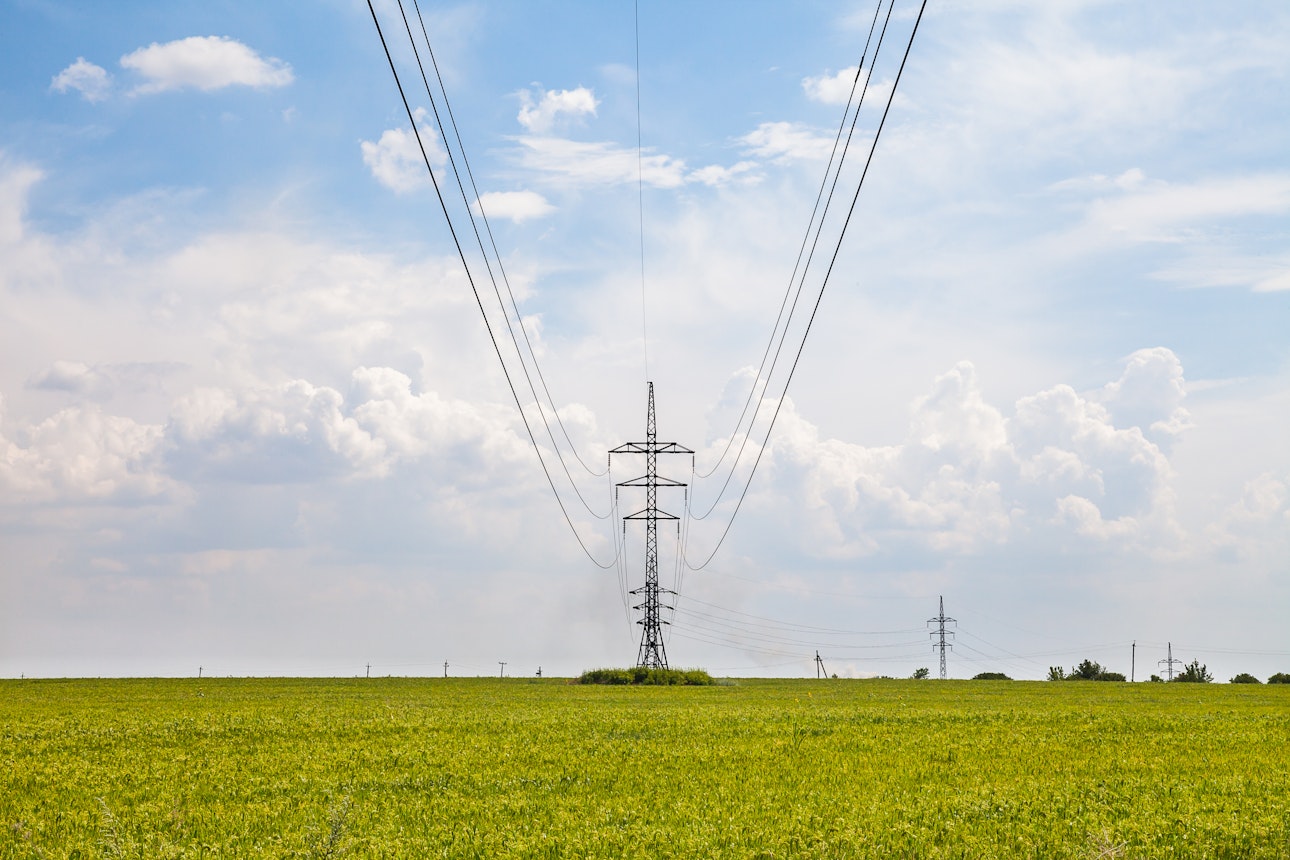
Analysts warn that curtailment may increase by 300% by 2035 as grid infrastructure struggles to cope during solar-heavy hours. Even with plans to add 11 GW of new transmission by 2029 (including the Silvania-Graça Aranha line), curtailment still threatens to cancel out a portion of the gain.
That logjam means lost income for projects already online, and the risk is even higher for new projects. Because lenders have to price in unutilized production, interest rates are higher, and collateral requirements are stricter. This forces developers to raise bid floors to stay bankable. Investors spooked by uncertainty about long-term returns are also treading more carefully as solar curtailment costs reach $20 per megawatt-hour.
Abundant sunlight and rapid PV advancements are catalyzing Latin America’s solar energy sector. Download the eBook: Latin America’s Solar Industry Snapshot: Key Drivers of Growth to dive into how five leading regions (Brazil, Mexico, Chile, Colombia, Panama/ Costa Rica) are growing their solar sectors.


Could BESS allow developers to store and monetize excess output? In this blog, we break down how utility-scale batteries can serve as both an engineering fix and a financial buffer, keeping the grid stable while helping developers recover lost value.
The curtailment challenge
Brazil’s curtailment problem has doubled to 20 terawatt hours in 2025. From January to August, developers lost a record 13.7% of their real-time availability. The situation has become so economically damaging that it is now considered a ‘national tragedy.’
Wind still accounts for most of the absolute losses, but solar takes the hardest proportional hit. In some regions of Brazil in 2025, wasted PV generation reached 27%, compared with 16% for wind. August alone saw 20% of Brazil’s potential solar output cut off, up from 12% the year before.
The northeast bears the brunt of this transmission squeeze.Renewable hubs in the Northeast consistently show some of the highest curtailment rates, reflecting transmission bottlenecks between generation and load centers. Bahia now sees over 30% of its solar output stranded at the source, while wind developers in Ceará are losing more than 25%. Grid bottlenecks prevent the region from pushing surplus generation toward the southeast’s load centers, leaving developers stuck with projects running below capacity and no route to sell what they generate.
The sector is losing cash as a result, and not all of it shows up on paper. Critics say that of the BRL 1.7 billion in curtailment-related losses, only BRL 1.1 billion is officially recognized by the grid operator, ONS. When the grid goes down, solar and wind data often aren’t recorded at all. And because losses are calculated in half-hour increments, any rapid or overlapping events within that window can get smoothed over or missed entirely.
Some analysts say financial losses may climb well past 30% by the end of the decade. And while that’s not stopping development outright, it’s forcing developers to reassess how much debt they can reasonably carry, and, more urgently, how to recover lost margins.
Compensation mechanisms: A work in progress
Concerned that the compensation measures currently available don’t match the scale of the financial damage from curtailment, solar industry groups are pressing regulators to commit to a more consistent, rules-based framework. They want to define exactly how and when financial losses from forced generation cuts will be compensated so that they can model returns accurately.
That pressure has moved the issue up the policy calendar. In September 2025, Brazil’s national electricity regulatory agency, ANEEL, convened a working group bringing together renewable energy associations, government agencies, and major financial institutions to assess potential compensation and flexibility frameworks for curtailment. While discussions are advancing, no finalized, system-wide compensation regime has yet been implemented. Regulatory work remains ongoing, and the structure, scope, and timing of any formal mechanism are still under review.
The agenda was to revisit Public Consultation 45/2019 and introduce a formal mechanism to share the financial impact of forced generation cuts. ANEEL eventually committed to developing short-term alternatives to ease the financial strain on developers.
But not everyone is convinced that the proposed solutions go far enough. The Brazilian PV energy association Absolar has warned that compensation alone won’t fix these structural issues. According to the group, about half of current outages stem from infrastructure weaknesses, particularly the lack of transmission lines and systemic grid instability.
Whether proposed near-term fixes will materially cut outage-driven losses is still an open question. Brazil’s National Energy Policy Council (CNPE) recently approved the rollout of synchronous compensators to keep networks within tighter operating limits. Meanwhile, the country’s energy research office has announced plans for 15,000 km of new transmission lines and BRL 56 billion in planned investments, expected to come online between 2028 and 2030. Studies are also underway to revise transmission guidelines following the November 2023 blackouts and to identify where new capacity is needed most urgently.
But until those lines are built, developers remain exposed, and Brazil’s clean energy system will keep spilling power it can’t deliver.

BESS as a technical solution
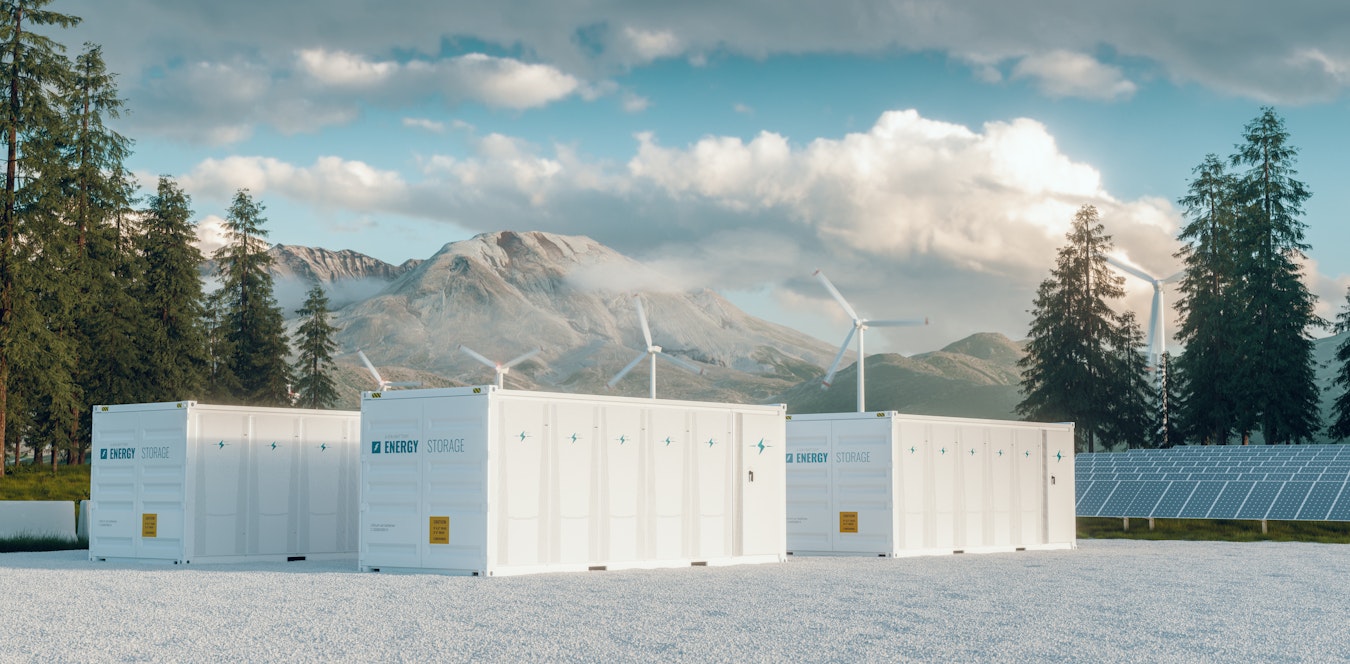
Large-scale storage plays a significant role in stopping curtailment from rising further, according to recent Wood Mackenzie analysis of Brazil’s scaling problem. During midday solar peaks, BESS can absorb the oversupply that would otherwise trigger curtailment and then release it hours later, when prices improve, and the grid has room to take it. Systems with longer duration (capable of storing energy deeper into the evening peak) will be essential as Brazil adds 76 GW more solar and onshore wind in the next 10 years. Although storage can significantly reduce curtailment and provide system flexibility, it must be paired with transmission expansion, market reforms, and operational mechanisms to fully unlock its potential.
While synchronous compensators and longer-term network upgrades are still needed to stabilize system voltage over time, they are infrastructure-heavy and operate at the system level. BESS can react much faster (within milliseconds to seconds) and provide localized support. Combined with demand response programs that reduce load during the most constrained intervals, BESS can reduce line loading within minutes while the physical network catches up.
BESS as a financial strategy
Storage also lets developers better manage revenue in curtailment-prone zones. When output is capped at the substation, projects with batteries can still recover value by selling that energy into stronger afternoon or evening prices. Even small arbitrage windows help claw back income that would otherwise be lost.
Aside from arbitrage, battery systems that meet performance standards can get paid to provide fast-response services such as frequency regulation or voltage control. These are paid on availability (not just energy delivery), which helps developers generate additional income even when curtailment levels remain high.

Regulatory and market outlook
At the moment, Brazil doesn’t have rules defining how storage interacts with the grid or how it gets paid. A planned federal auction, initially scheduled for June 2025, was meant to change that, but it was postponed.
The announced BESS tender that is likely to be carried out towards the second half of 2026 is still subject to regulatory finalization. The auction draft calls for 2 GW of capacity, which could mean 8 GWh of storage if structured around a 4-hour profile. That would draw in an estimated BRL 10 billion in contracts.
Regardless, Brazil seems to be laying the groundwork for storage. Battery component imports jumped 89% between 2023 and 2024, and developers are pushing BESS proposals into the pre-registration phase.
Designing Solar‑Plus‑Storage for a Constrained Grid with RatedPower
As curtailment reshapes Brazil’s solar economics, developers need tools that reflect real‑world grid constraints, not ideal conditions. RatedPower helps teams design and evaluate hybrid solar‑plus‑BESS projects from the earliest feasibility stage, quantifying curtailment risk, testing storage sizing and dispatch strategies, and understanding how design decisions affect revenue, grid compliance, and bankability.
By simulating how batteries interact with congestion, price signals, and operating limits, developers can make more confident investment decisions and protect margins. To see how these insights apply to your own projects, you can request a demo and explore how RatedPower supports smarter, more resilient plant design.
Latin America’s Solar Industry Snapshot: Key Drivers of Growth
In this ebook, we explore what policy and market forces are driving the Latin America solar expansion. Let’s examine these factors and analyze how five leading regions.

Latest stories
Related posts
Market analysis
From Loi Grémillet to PPE3: What France’s energy shift means for solar
Discover how the Grémillet bill reshaped France’s energy debate, and how the final PPE3 decree now defines the roadmap for solar and renewables through 2035.
Updated 17 MAR, 26


Market analysis
A look at the largest-scale solar projects across the UK
Find out more about how the UK is developing substantial solar power projects, including the Queequeg Renewables Solar PV Park and the Botley West Solar Farm.
Updated 24 FEB, 26


Market analysis
Battery Storage in Africa: From Backup to Backbone
See why Africa is prioritizing off-grid battery storage that operates independently, as 50% of its population doesn’t have access to a stable power supply.
Updated 19 FEB, 26