Watch a demo
Power where it’s needed: Solving LatAm’s grid instability with distributed solar and storage
Find out how a bottom-up approach is solving LatAm’s grid instability, with community-led solar and storage projects giving people control over their energy.



Diego López
Senior Account Director LatAm
Diego López is RatedPower's Sr Account Director LatAm.

Content
Latin America and the Caribbean (LAC) have connected nearly every household to the grid over the last two decades, with electricity access averaging 97% and many countries reaching universal coverage. But that figure doesn’t show the day-to-day reality of persistent, hours-long outages, especially in underserved rural areas.
Even where connections exist, they don’t always deliver stable power. Grid losses in LAC average 16% (nearly triple the 6% seen in OECD countries). Illegal tapping also worsens voltage drops and saps utilities’ revenue. Governments have tried to address the issue through traditional measures such as grid expansion and subsidies, but have failed to provide a reliable supply to all regions.
Latin America’s solar sector is booming, driven by abundant sunlight and rapid PV innovation. With green power already at 60% of electricity generation, the region is surpassing global benchmarks. Discover the policies and market forces fueling this growth. Download our eBook now for more.
What’s truly beginning to work is a bottom-up approach: community-led solar and storage projects that give people control over their energy.
Small-scale and mid-scale solar relieve stress on central grids
Because they are modular and quick to deploy, distributed solar and storage systems are becoming viable alternatives in rural and underserved regions that national grids can’t reach.
Several countries in Latin America have developed programs to support community-led models and allow local groups to participate in system installation and maintenance. These mechanisms allow end users to own their panels and batteries, minimizing their reliance on external service providers:
Chile’s Comuna Energética and Comunidad Energética back a wide range of projects, including shared solar installations and energy education campaigns.
Panama’s Solar Champions Program trains women to operate and maintain off-grid PV systems in their own communities.
Brazil and Costa Rica also have a long track record with rural energy co-operatives (many started decades ago) that now support solar integration and participatory management.

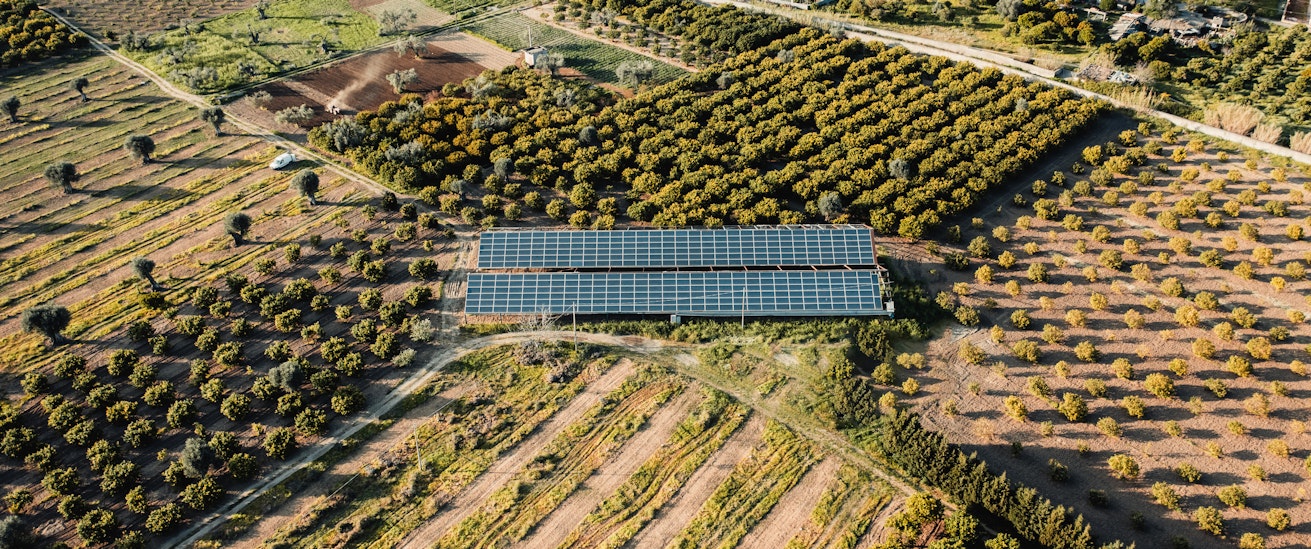
These systems have proven to work well in real conditions. For example, in Rio’s favelas, RevoluSolar uses a co-operative model to help households reduce bills through net metering. The program also trained more than 20 young people from the neighborhood as electricians and solar installers, effectively building a local workforce to maintain and expand the system.
In the Brazilian Amazon, the Reservas Extrativistas initiative replaced diesel generators with solar PV and storage. The new system stabilized electricity for cold storage and helped increase local fish production. Community members who received training now handle basic maintenance and system monitoring, helping maintain steady performance and reduce downtime.
In recent years Brazil has established itself as the primary adopter of distributed generation (DG) within Latin America, accounting for around 83 % of the region’s installed DG capacity according to energy analyses from 2025. Brazil itself had about 37–43 GW of distributed generation capacity in 2025, overwhelmingly solar-powered and driven by millions of consumer-installed systems.
Other markets like Mexico and Puerto Rico follow with much smaller shares (approximately 10 % and 2–3 % respectively), underscoring Brazil’s dominant role in decentralized power generation across Latin America.
Microgrids in rural areas with limited or unstable grid access
Microgrids (small, self-contained power networks often managed at the community level) are also increasingly replacing diesel throughout LAC.
Colombia is deploying solar microgrids and small hydropower to reduce emissions in remote zones, where diesel use reached 14 million liters per month in 2021. These systems allow users to buy energy in bulk, sell excess power back to the group, and pay with flexible pay-as-you-go models. Over 140 projects are already up and running, and another 100 are in development (many are still waiting for permits).
Rooftop solar is also being deployed at scale alongside these microgrids. Colombia expects to add between 4.2 and 10.2 GW of rooftop capacity by 2030, roughly one million new systems per year. The target is within reach because the economics are strong: residential projects can return up to 25% while industrial systems can reach 60%.
Brazil is also building proof-of-concept systems that can be replicated in other sectors and regions. São Paulo’s Unicamp University is currently running a full microgrid that combines 565 kWp of solar, a 1 MW/2 MWh battery system, and a backup gas generator. This government-funded system reduces the university’s annual energy costs by about BRL 450,000 (USD $83,000) and functions as a live test site for future applications in mining and agriculture.
Storage as a local grid stabilizer during outages or frequency dips
Because LAC’s grid limitations undermine disaster resilience and energy security across the Americas, international partners are stepping in. The US DOE’s NREL (a federally-funded clean energy research lab) works directly with LAC governments and utilities to deploy backup systems and long-duration batteries.
NREL teams designed storage strategies in Colombia to extend power into non-interconnected zones.
They also trained grid operators and built production-cost models in Belize and Costa Rica to size storage for distributed PV.
NREL and local authorities in Argentina’s Tierra del Fuego are teaming up to integrate wind with long-duration batteries. La Pampa’s local officials are using NREL modeling to identify the best sites for distributed PV and storage.
In the Caribbean, NREL is deploying solar-plus-storage at critical facilities. It helps install systems at schools and clinics in Antigua and Barbuda, and local staff were trained to handle maintenance. In Jamaica, NREL mapped 1,700 sites (including emergency shelters and pumping stations) to pinpoint where it makes sense to build storage-backed microgrids, providing a basis for investment and funding decisions.
Meanwhile, Chile is using private investment to develop utility-scale storage for its booming renewables sector. Developers like AES Andes and Enel are busy building multi-gigawatt battery fleets to stabilize the country’s solar and wind growth. Projects are moving quickly because of falling battery costs.

Storage regulation and government support
There’s no doubt that renewables are rising across Latin America; however, saturated grids and limited storage force developers to curtail generation. Analysts are urging LAC governments to establish better, clearer regulations on how storage will connect to the grid and set payment mechanisms so that storage services can generate reliable income.
There are signs of progress. In Chile, Decree 70 introduced a capacity payment mechanism that gives investors predictable returns. Brazil is also drafting its first energy storage regulatory framework to establish guidelines for grid access, usage, and revenue in preparation for a BESS auction planned for 2026.
Beyond Chile and Brazil, other countries are moving decisively. The Dominican Republic now mandates the incorporation of battery energy storage systems (BESS) for all utility-scale PV projects under Resolución SIE-092-2025-LCE. Mexico has incorporated storage requirements into its Ley para el Aprovechamiento de Energías Renovables, signaling a strong commitment to hybridization. Meanwhile, Peru recently approved Ley N° 32249 (2025), which defines the services and operational standards for hybridized utility projects, further cementing storage as a cornerstone of regional energy policy.
How designers can position solar+storage for energy security
Across LAC, where rural communities and edge-of-grid regions still face frequent outages, the value of solar-plus-storage is measured less in theoretical carbon gains and more in whether the lights stay on. Users prioritize a steady supply over anything else.
For a solar project to get the green light, it has to deliver outcomes that matter to the people who will be using it: lowering fuel costs, keeping clinics and food systems online, and providing reliable power in blackout-prone areas. Developers need to prove that their systems address these priorities to get approval and bring investors to the table.
BESS perspectives in Latin America
In this ebook, we explore the dynamic growth of BESS in Latin America. Discover how the region is leveraging its renewable energy potential, backed by regulatory support and rich natural resources, to stabilize the electrical grid and drive sustainable energy solutions.

Latest stories
Related posts
Market analysis
From Loi Grémillet to PPE3: What France’s energy shift means for solar
Discover how the Grémillet bill reshaped France’s energy debate, and how the final PPE3 decree now defines the roadmap for solar and renewables through 2035.
Updated 17 MAR, 26


Market analysis
A look at the largest-scale solar projects across the UK
Find out more about how the UK is developing substantial solar power projects, including the Queequeg Renewables Solar PV Park and the Botley West Solar Farm.
Updated 24 FEB, 26


Market analysis
Battery Storage in Africa: From Backup to Backbone
See why Africa is prioritizing off-grid battery storage that operates independently, as 50% of its population doesn’t have access to a stable power supply.
Updated 19 FEB, 26