Watch a demo
PV & BESS boosting resilience in nuclear-heavy grids
France's Loi Grémillet was rejected, but solar and hybrid PV-BESS development continues. Learn how TURPE 7, PPE3, and incentives can shape your design decisions




France's energy policy has had a turbulent two years, but the uncertainty is resolving. The national assembly was supposed to update France’s energy programming law back in July 2023, but that deadline came and went with no agreement.
To address the lapse, a new bill nicknamed the Loi Grémillet (named after the senator who drafted it) was put forward in 2025. However, that, too, was ultimately rejected when deputies from the political right added a controversial provision to block all new wind and solar projects.
What began as a parliamentary deadlock ended with the government adopting the Programmation pluriannuelle de l'énergie 3 (PPE3) by decree in February 2026, providing the regulatory clarity that developers and investors had been waiting for.

The 2026 Trends Report reviews the solar sector’s performance last year and examines future influences. It draws on industry perspectives and real project data. The report explores grid constraints, permitting, hybridization, and digitalization. Download to examine these findings in detail.
Understanding how France got here matters for anyone designing or financing solar and battery energy storage system (BESS) assets in the country.
What was the Loi Grémillet?
The Loi Grémillet bill set out a broad range of targets:
Boost renewable energy production to 200 TWh by 2030.
Increase deep home energy retrofits to 800,000 per year by 2030.
Cut fossil fuel use by 45% within five years.
Phase out coal power almost entirely by 2027.
Intended to keep electricity prices stable through regulated tariffs.
Improve consumer transparency through clearer energy contracts and better comparison tools.
Give France's energy regulator, the Commission de Régulation de l'Energie (CRE), new authority over emerging infrastructure including hydrogen distribution and carbon dioxide transport networks.
One of the bill's more contentious moves was legally grouping renewables and nuclear under a new category called "decarbonized energy," treating both as low-carbon and essential to France's climate goals. Analysts interpreted this framing as a mechanism to justify parallel investment in nuclear and renewables.
On the nuclear side, the bill proposed building 14 new reactors, starting with six by the end of 2026, with a long-term target of 27 GW of new nuclear capacity by 2050. It also sought to retain most existing reactors at approximately 63 GW of capacity, back research into fourth-generation reactor technology, and reform France's nuclear fuel and waste strategy.
Several provisions were designed to accelerate nuclear delivery, including extending regulatory reforms to 2050, easing site restrictions for small and modular reactors, and extending the streamlined framework used for nuclear projects to ITER, the international nuclear fusion experiment based in southern France.
Why was the bill rejected?
During the National Assembly's first reading, the Loi Grémillet was overwhelmed by more than 850 amendments. The most damaging was a proposed moratorium on all new wind and solar development, which ran counter to France's energy roadmap and drew criticism from climate advocates and industry bodies. The amendments pushed the bill well outside its original scope, and the Senate rejected it at the second reading.
How did France resolve the deadlock?
With Parliament unable to reach agreement, the government moved through a different legal channel. In February 2026, the executive adopted PPE3 by decree. Unlike a law, a decree does not require a parliamentary vote and can be issued directly under the government's regulatory powers.
Critically, PPE3 includes no moratorium on solar or wind. While nuclear is positioned as a structural pillar of France's electricity mix, renewable deployment targets are maintained and solar remains central to the plan. PPE3 now serves as France's official energy roadmap through 2035.
What does PPE3 mean for solar development?
PPE3 restores policy visibility across the sector. The plan targets approximately 54 GW of installed photovoltaic (PV) capacity by 2030 and 65 GW to 90 GW by 2035. Auction schedules and permitting processes now have a clearer framework to operate within.
Storage is not assigned a specific national gigawatt target under PPE3, but the decree formally recognizes BESS as essential for grid flexibility and system stability. That recognition underpins the market and capacity mechanisms through which battery revenue will increasingly flow.
For developers already planning or building projects, the trajectory is intact. The more immediate question is how to design assets that will perform well as market conditions evolve around that trajectory.
Why hybrid PV-BESS is becoming the stronger design choice
The recent TURPE 7 tariff reform is creating real financial incentives for storage assets that actively support grid management. Under the new framework, batteries connected to medium- and high-voltage networks (HTA and HTB levels) can earn revenue for:
Discharging during high-demand hours in designated withdrawal zones (soutirage), specifically the 8 to 12 am and 5 to 9 pm winter peak windows.
Charging at midday in summer in designated injection zones (injection solaire) to absorb excess solar output.
The French grid authority has mapped more than 3,000 zones across the network, each classified as either a withdrawal or injection zone. Which zone a project sits in now has direct revenue implications, and that is worth factoring into design decisions at the outset.
RatedPower's design platform allows developers to model AC-coupled and DC-coupled PV-BESS configurations, compare dispatch scenarios, and understand how system architecture affects eligibility for these mechanisms, before a single piece of equipment is specified. Book a demo here.
Arbitrage and ancillary services economics are improving
Growing shares of solar and wind in France's energy mix are widening intraday price spreads. Retail tariff reforms are giving operators clearer signals about when electricity is cheap or expensive, making dispatch optimization more tractable and arbitrage returns more predictable.
BESS systems in France are also gaining access to capacity markets, where batteries are paid to be available during peak demand periods, and ancillary services markets, where they earn revenue for stabilizing the grid through frequency or voltage control. Grid-service-ready assets with fast ramping and frequency response capabilities are well positioned to qualify for these mechanisms as they develop.
PPE3's emphasis on electrification, driven by electric vehicles, heat pumps, and industrial decarbonization, points to growing electricity demand through 2035. Even with expanded nuclear capacity, solar and storage will remain essential to meeting peak loads and regional supply needs. Systems designed purely to generate power are leaving revenue on the table. The assets that perform best will be those designed from the start to respond to price and grid signals, which means making storage architecture, connection voltage, and dispatch logic part of the design conversation early.
Standalone BESS: the new trend for developers in France
Standalone battery energy storage system (BESS) is emerging as a distinct opportunity in France, and the pipeline is starting to reflect it. France has historically been less dominated by large standalone BESS than markets like the UK and Italy, but that is changing.
According to Modo Energy, utility-scale standalone projects of over 100 MW are now clearly scaling, with the 240 MW / 480 MWh TAG Energy project and the 120 MW / 240 MWh Kallista project among the headline developments in the construction pipeline. The underlying economics are strengthening in parallel.
Rabobank's analysis of the French BESS market found that day-ahead price spreads roughly doubled between January 2024 and August 2025 as renewable capacity grew, widening the arbitrage window that standalone systems are well positioned to capture. Reforms to the automatic frequency restoration reserve (aFRR) market, which moved to an open auction structure in 2024, have also opened up ancillary services revenues that were previously harder to access, with prices and contracted volumes rising sharply since.
On the regulatory side, RTE's planned centralization of the capacity mechanism from the 2026-2027 delivery period onward points toward greater revenue predictability for storage assets. France is not yet a pure standalone market in the way the UK is, but the direction is unambiguous. For developers with grid connection opportunities, standalone BESS in France is now a credible design brief, not a future consideration.
RatedPower supports that process by giving engineering and development teams a single environment to run those design decisions in parallel, reducing iteration cycles and helping teams reach bankable designs faster.
2026 Trends: Renewable Energy & Solar Research Report
Download our latest report to gather insights, stats, and opinions on the current state of the renewables sector. The report draws from an industry survey and analysis of solar simulations carried out on the RatedPower Platform.

Latest stories
Related posts
Market analysis
DACH BESS: shield solar revenue from negative prices
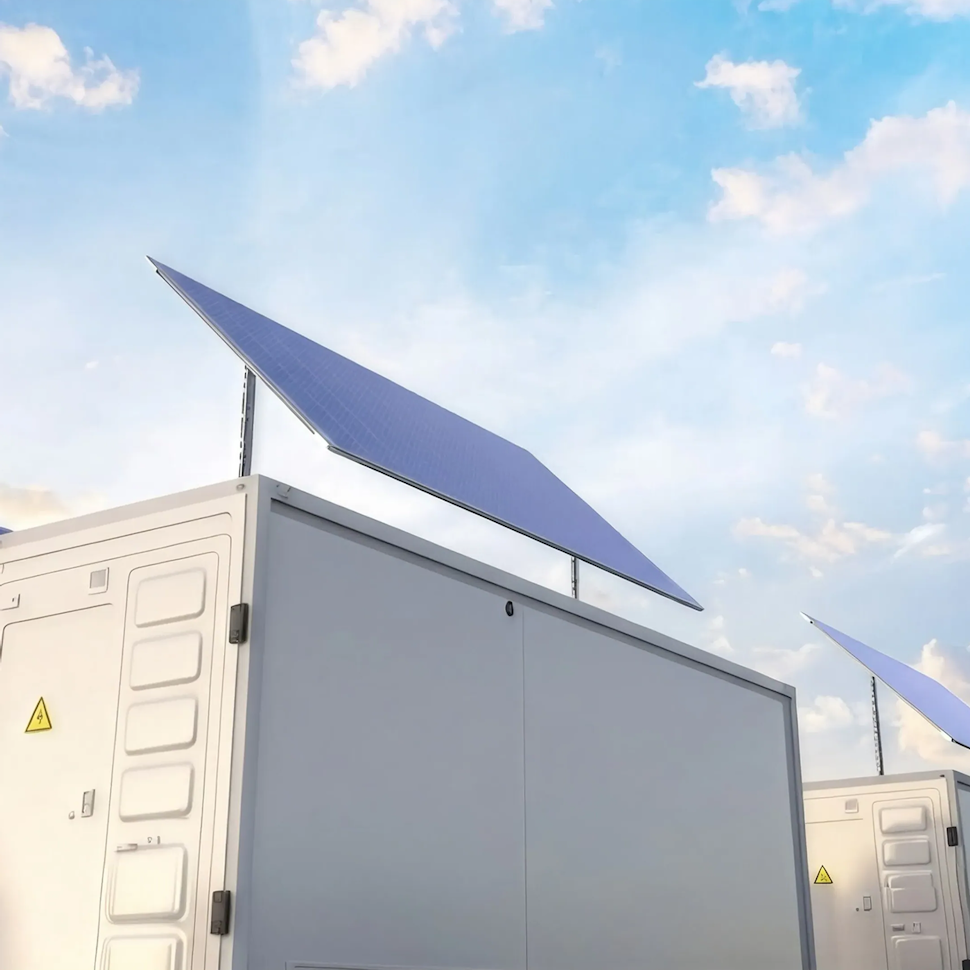
Explore how BESS can help German solar developers manage negative-price exposure, and compare early-stage PV-plus-storage designs with RatedPower.
Updated 22 SEP, 26


Market analysis
Curtailment is now a design constraint in Iberia: here's why
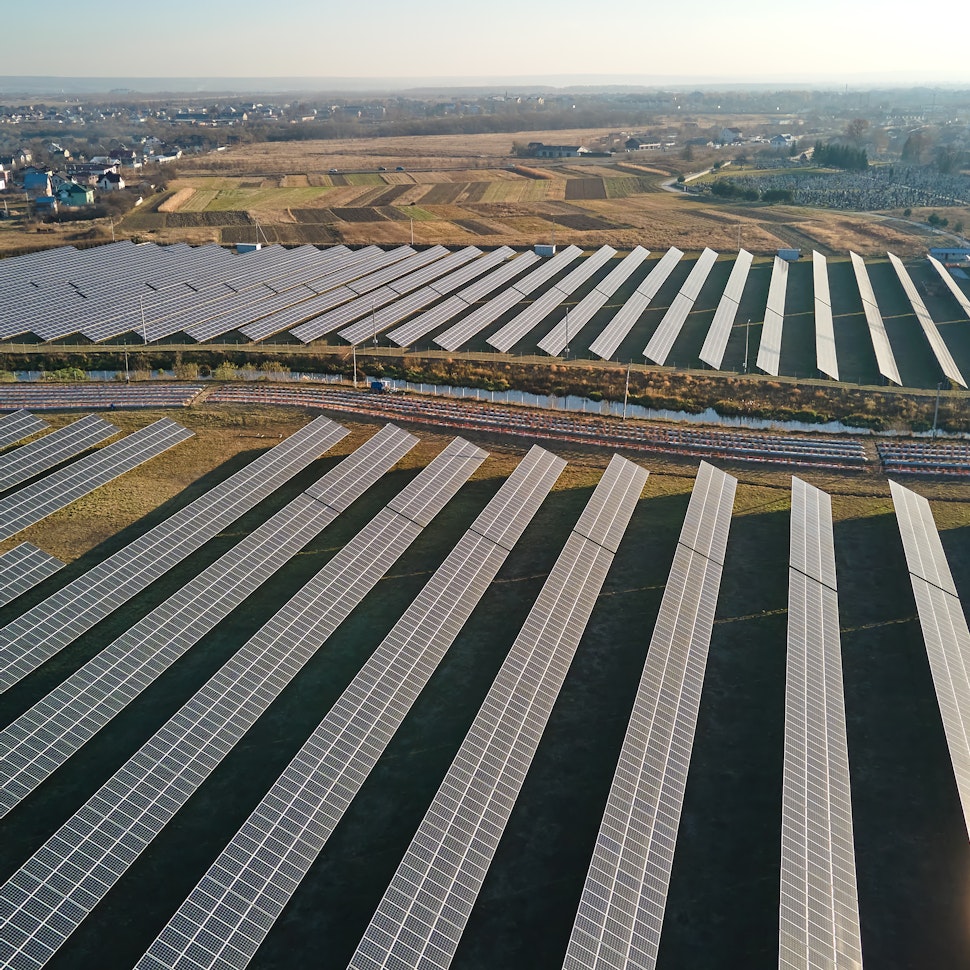
Solar curtailment in Spain is now a design constraint. Download RatedPower's Iberia curtailment playbook and model PV and BESS layouts before you build.
Updated 8 SEP, 26


Market analysis
Why grid-aware design is now critical for solar and BESS project economics in Australia
Grid constraints now shape BESS project development in Australia. Download RatedPower's BESS Design Handbook for a full sizing and dispatch framework.
Updated 1 SEP, 26