Watch a demo
A stronger, smarter beat: How PULSE 2026 energizes renewable innovation
Discover key insights from PULSE 2026, where AI, storage, and solar innovation meet. Explore sessions, speakers, and takeaways. Read the recap.


Jeremy Vickerman
Senior Content Manager
Senior Content Marketing Manager at RatedPower with extensive experience in content strategy, production, and communications. Over a decade of expertise spanning marketing, recruitment consulting, and public relations across the UK and Spain, with a strong track record in driving brand visibility and audience engagement.


Content
- The unfair advantage: AI, operations, and innovation
- Storage, green hydrogen, and project economics
- Technical workshops: From prospecting to optimization
- Energy modeling, agri‑PV, and sustainability
- Modeling revenue, replication, and iterative design
- Broader context: Geopolitics and investment
- Day 2: Resilience, intelligence, and the economics of a smarter energy system
- De‑risking energy storage in emerging markets
- The next wave of energy storage
- Understanding the tools behind modern solar design
- Earth observation, AI, and trust in data
- From data to profit and grid compliance
- The Energy Trilemma Revisited
- Closing Reflections on PULSE 2026
On April 15–16, 2026, PULSE returned to Espacio COAM in Madrid for its fourth edition. Renewable energy professionals from the global supply chain gathered for two days of discussion, debate, and technical exploration.
Since its launch in 2023, PULSE has become a meeting point for project developers, electricity providers, engineering, procurement, and construction companies (EPCs), engineers, investors, and technology providers. The 2026 edition reflected an industry now focused on large-scale implementation.
This year’s agenda combined strategic perspectives and technical depth. The sessions reflected challenges facing the renewable sector: grid constraints, emerging storage markets, hybrid project design, and the rising role of data and AI in decision-making.
The unfair advantage: AI, operations, and innovation
PULSE 2026 opened with a welcome led by Andrea Barber, Yama Rodríguez, and Ángela Gutiérrez Moreno, who set the context for two days of parallel tracks spanning strategic, technical, and market‑focused conversations.
The opening keynote was delivered by Colin Westmoreland, Enverus's Chief Innovation Officer. His session explored the forces shaping the power and renewables sector. He examined how rising demand, system complexity, and AI innovation on the RatedPower platform are changing the planning, delivery, and operation of renewable energy. He emphasized one key idea:
“The energy transition will not be won by the companies with the most capital. It will be won by the fastest and best-informed.”
The morning continued with a panel titled “Smarter Energy Operations: AI for Predictive Maintenance and Market Trading.” The panel included Constantinos Peonides, Gautier Moulin, Ahmed Abdelrasoul, and Wendy Lazcano. They explored how AI is used for operational decisions across the power sector.


The panel addressed practical applications of AI, including predictive maintenance strategies and navigating increasingly complex energy markets. The conversation highlighted how data‑driven approaches are becoming embedded in day‑to‑day operational workflows.
Storage, green hydrogen, and project economics
As the agenda progressed, attention turned to infrastructure deployment and project economics. Ahmad Hany Alkhatib opened with “Navigating First‑Wave BESS Projects: Delivering in New Storage Markets.” He covered technical and delivery challenges in early battery energy storage projects, especially in emerging regulatory environments.
Next, Lucía Beloqui presented “Integration of Large‑Scale Electrolysis with Renewables.” She explained how hydrogen can be paired with renewable generation at scale. Her session covered what to consider when aligning these technologies within actual energy systems. Lucio Paiva, Solar Engineer at Casa dos Ventos, followed with “LCOE Optimization Workflow at Casa dos Ventos.” He shared how structured workflows and modeling practices support cost‑optimization throughout project development.
Matthew Berwind from Fraunhofer concluded the session block with “Real‑Time Optimization of PV Tracker Controls and PV Simulations.” He showed how advanced simulations and real‑time control strategies can improve PV system performance. He emphasized the importance of accurate modeling in operational decision-making.
Together, these sessions showed a growing focus on linking technical performance, economic outcomes, and delivery feasibility.
Designing BESS layouts means more than placing containers and PCS. Early decisions are crucial. Listen back to this webinar: Accelerating BESS design with industry-proven layouts to learn about common container and PCS configurations in utility-scale projects, key constraints engineers face, and how our latest BESS feature update can help overcome them.
Technical workshops: From prospecting to optimization
After the lunch break, parallel technical workshops gave deeper, hands-on insight into renewable project workflows.
Jorge Masa and Álex Gómez led “Seeing the Whole Picture: Prospecting, Evaluating, and Designing with Enverus PRISM.” They showed how early‑stage site identification, evaluation, and design can be integrated into one workflow. The workshop demonstrated the value of connecting prospecting data with design decisions.


At the same time, Natalia Opie presented “RatedPower’s Piling Earthworks Strategy: From Real‑World Engineering to a Cloud‑Based Solution.” She linked traditional engineering, such as piling and terrain, with digital tools designed to support scalable project development and consistency.
Enverus PRISM, now integrated with RatedPower, offers a smarter, faster way to plan solar plants. Download the eBook: Enverus PRISM For Solar Developers: Key Benefits and What to Expect, to learn how Enverus PRISM can take your next solar project from idea to execution.
Energy modeling, agri‑PV, and sustainability
The afternoon included advanced modeling, new deployment models, and sustainability. Irene Negro presented “Real‑World PV Plant Validation: Leveraging 3D Energy Modeling for Accurate Performance Insights.” She showed how 3D modeling can validate expected plant performance under real operating conditions.
In another session, Jarl Egil Markussen presented “Unlocking Solar Opportunities through Agri‑PV and BESS.” He described hybrid setups combining solar, storage, and agricultural land. He emphasized how these can address land-use constraints and support ongoing renewable deployment.
Looking beyond electricity generation, Miguel Montero presented “Sustainability Assessment of the Biofuels Value Chain in Spain.” He explored how to evaluate sustainability impacts across the full value chain of alternative energy solutions.
Modeling revenue, replication, and iterative design
Later workshops, led by Gonzalo de Blas and Hassan Farhat, focused on “Replicating Your Projects Inside RatedPower: The Present & the Future.” They showed how standardized project replication improves efficiency and consistency across development pipelines.
At the same time, Ming Cheng and Gorka Arrieta explored the complex challenges of storage development in “What Is the Best Approach to Model BESS Revenue Stacking?” Their session covered how to model multiple revenue streams within storage projects.

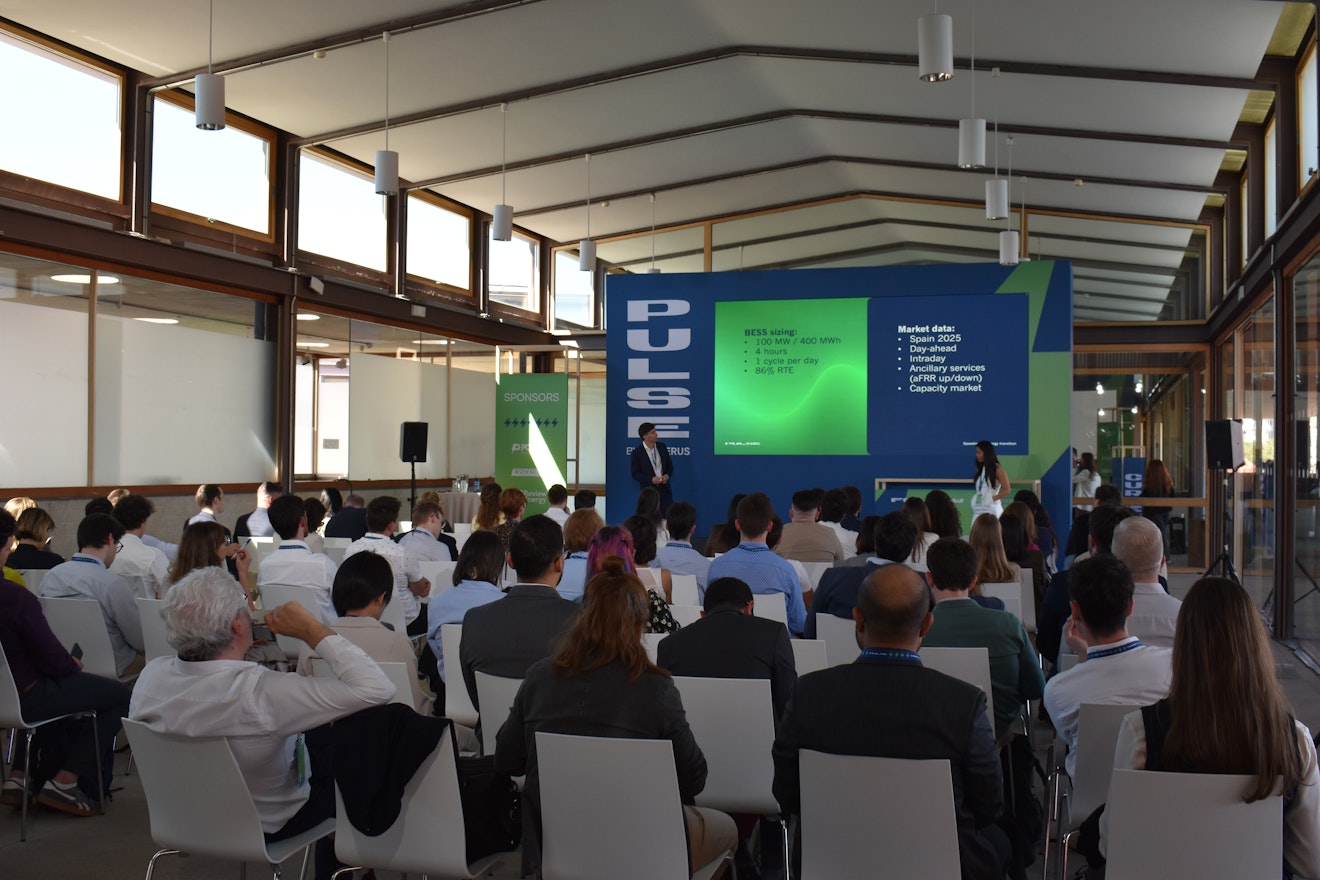
Bernardino Martín and Álvaro Pajares then presented “Iterative PV Plant Optimization Using Layout Editor and 3D Energy in RatedPower.” Their workshop demonstrated how iterative design workflows can refine plant layouts and performance assumptions in a step-by-step fashion.
Broader context: Geopolitics and investment
Beyond technical execution, PULSE 2026 also studied broad influences on the energy transition. Bruna Bosi Moreira presented “Geopolitics of the Energy Transition: The Feedback Loop Reshaping Global Power.” She placed renewable energy growth within the context of global political dynamics.
Talks then turned to “Impact Investing Across the Power Sector Value Chain,” presented by Santos Díaz and Maria Samoilova. They explored how impact‑focused investments are being used across the sector.
The 2026 Trends Report reviews the solar sector’s performance last year and examines future influences. It draws on industry perspectives and real project data. The report explores grid constraints, permitting, hybridization, and digitalization. Download to examine these findings in detail.
The day ended looking at tracker optimization, with Cecilia Hernández and Nick Opdahl comparing terrain‑aware backtracking with standard approaches using RatedPower’s advanced 3D energy model. Their session showed how adapting backtracking to site topography can mitigate shading losses, boost energy yield, and translate into measurable profitability gains when weighed against implementation costs.
Alongside this, Serap Demirhan, Technical Customer Success Manager at Delfos Energy, shared how data‑driven asset performance management is being applied across solar, wind, and battery storage portfolios. Drawing on her background in energy systems engineering and data science, she demonstrated how operational data can be transformed into strategic insights that support optimization and informed decision‑making.
Followed by Carmen Izquierdo who explored current investment trends, transactions, and valuations in the renewable energy M&A landscape. Drawing on nTeaser’s visibility across deals in Spain and Italy, her session examined how investor appetite, deal structures, and execution readiness are shaping value creation in solar PV and BESS projects.
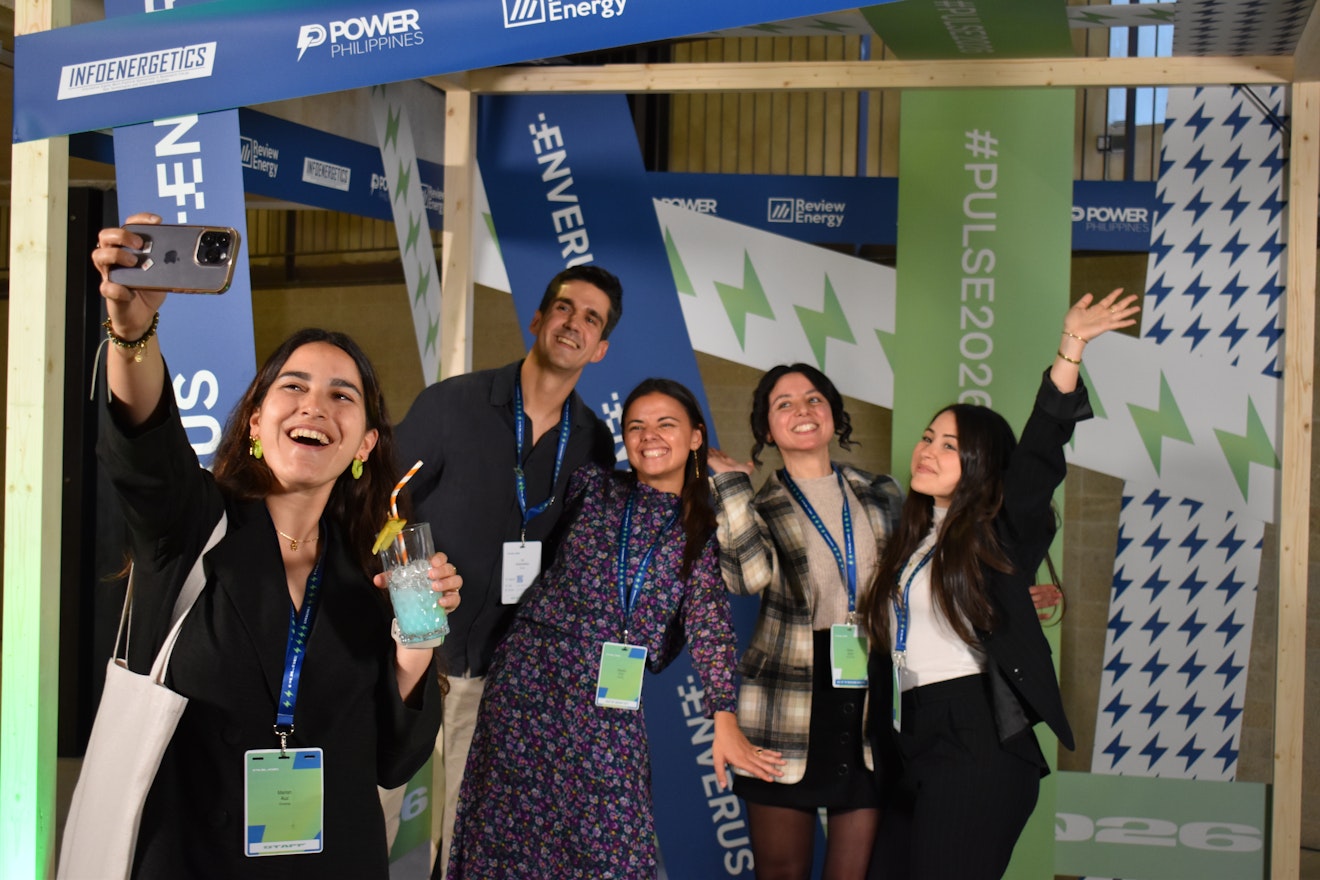
As Day one came to a close, the focus shifted from conference rooms to a relaxed happy hour and networking dinner. Attendees unwound with branded cocktails and played networking bingo. The evening continued over dinner at Bosco de Lobos, where everyone could let their hair down, strengthen connections, and close the day in a fun, informal way.

Day 2: Resilience, intelligence, and the economics of a smarter energy system
On the second day, PULSE 2026 shifted the focus toward resilience, intelligence, and building long‑term value across energy systems. Day two explored how regulatory clarity, climate risk, data integrity, and artificial intelligence are changing the design, financing, and operation of renewables in an increasingly complex world.
From early‑stage policy developments in emerging storage markets to the physics underpinning solar cells, the agenda offered a multifaceted view of what it now takes to deliver renewable energy projects that are efficient, robust, and future‑ready.
De‑risking energy storage in emerging markets
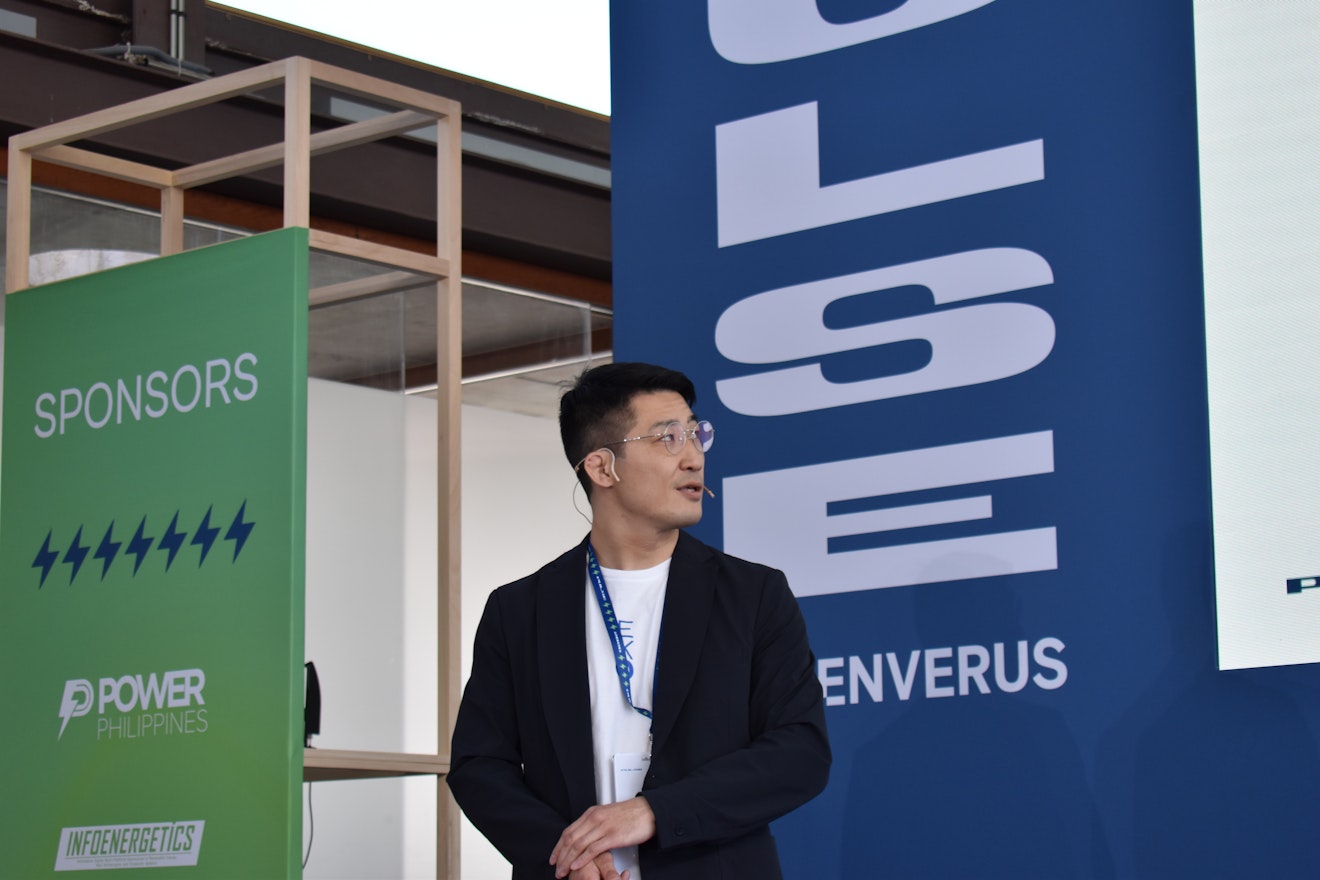
The day began with a focus on energy storage and regulatory maturity. Gandy Nuñez led “The Mandate for Resilience: De‑risking the Philippines’ Battery Energy Storage System Landscape.” The session explored implications of the ESS Act, passed by the Philippine House in early February 2026, which sets a legal framework for energy storage systems.
The legislation marks a decisive shift away from isolated pilot projects toward storage as a fully regulated asset class. By enabling revenue stacking, the law allows storage operators to combine income streams such as ancillary services and energy arbitrage within a structured market environment. This regulatory clarity was positioned as particularly relevant for Spanish and European investors seeking bankable opportunities in emerging markets.
The conversation then turned to the growing importance of climate resilience in solar development, with Zara Meneses delivering “Building Climate‑Resilient Solar: Disaster Risk and Site Execution in a Changing Environment.” As solar projects increasingly expand into mountainous, coastal, and climate‑exposed regions, the session highlighted how traditional site execution approaches are no longer sufficient.
Drawing on projects in climate‑vulnerable environments, the talk explored how disaster risk management must be embedded into planning and construction oversight. Topics included flood modeling, drainage design, slope stabilization, and extreme weather resilience, alongside less visible but equally critical considerations such as terrain assumptions, runoff coefficients, access roads, and community interfaces.
The session emphasized that if these factors are not addressed early, they can lead to long‑term performance issues and reputational risk, underscoring the need to integrate climate risk, engineering design, and construction governance from the outset.
The next wave of energy storage
Energy storage remained center stage in a panel discussion titled “Unlocking the Future of Energy Storage: Investment, Innovation, and Operational Excellence,” featuring Lluís Millet, Rafael Hernández, Judith Núñez, and Anna Rivera. The panel explored how the rapid global expansion of storage and hybrid systems is reshaping both opportunity and risk across the sector.


Discussion focused on investment strategies and financial models shaping the storage market, as well as negotiation tactics and the role of predictive analytics in maximizing returns. The panel also addressed the importance of technical assurance and control systems, highlighting how long‑term operational readiness is critical to ensuring storage assets deliver on their financial and system value.
Together, the speakers offered a practical view of how organizations can optimize hybrid solutions and position themselves for success as storage deployment accelerates.
Understanding the tools behind modern solar design
In parallel sessions, attention shifted toward the tools and data that underpin modern renewable workflows. Julian Scheer led “How Does RatedPower Think?”, offering a deep dive into the logic behind RatedPower’s layout automation algorithms.
While automation dramatically accelerates layout design and output generation, the session emphasized the importance of understanding how the algorithm works when developers need to achieve specific goals, such as exact equipment positioning, balanced MV feeders, or precise road and fence trajectories. The session bridged automation with intentional design control, highlighting how insight into the tool enables more targeted outcomes.
At the same time, María Gil presented “Turning Field Work Into an Asset Intelligence Engine,” exploring how structured, high‑quality field data can be transformed into actionable intelligence. By standardizing QA/QC and O&M findings, including photos, observations, issue severity, and resolution timelines, teams can unlock analytics that improve operational decision‑making and portfolio performance. The session also demonstrated how this data can support contractor evaluation, benchmarking, and stronger vendor negotiations through objective KPIs, with AI tools enabling scale through automated reporting, training support, and smarter prioritization.

Earth observation, AI, and trust in data
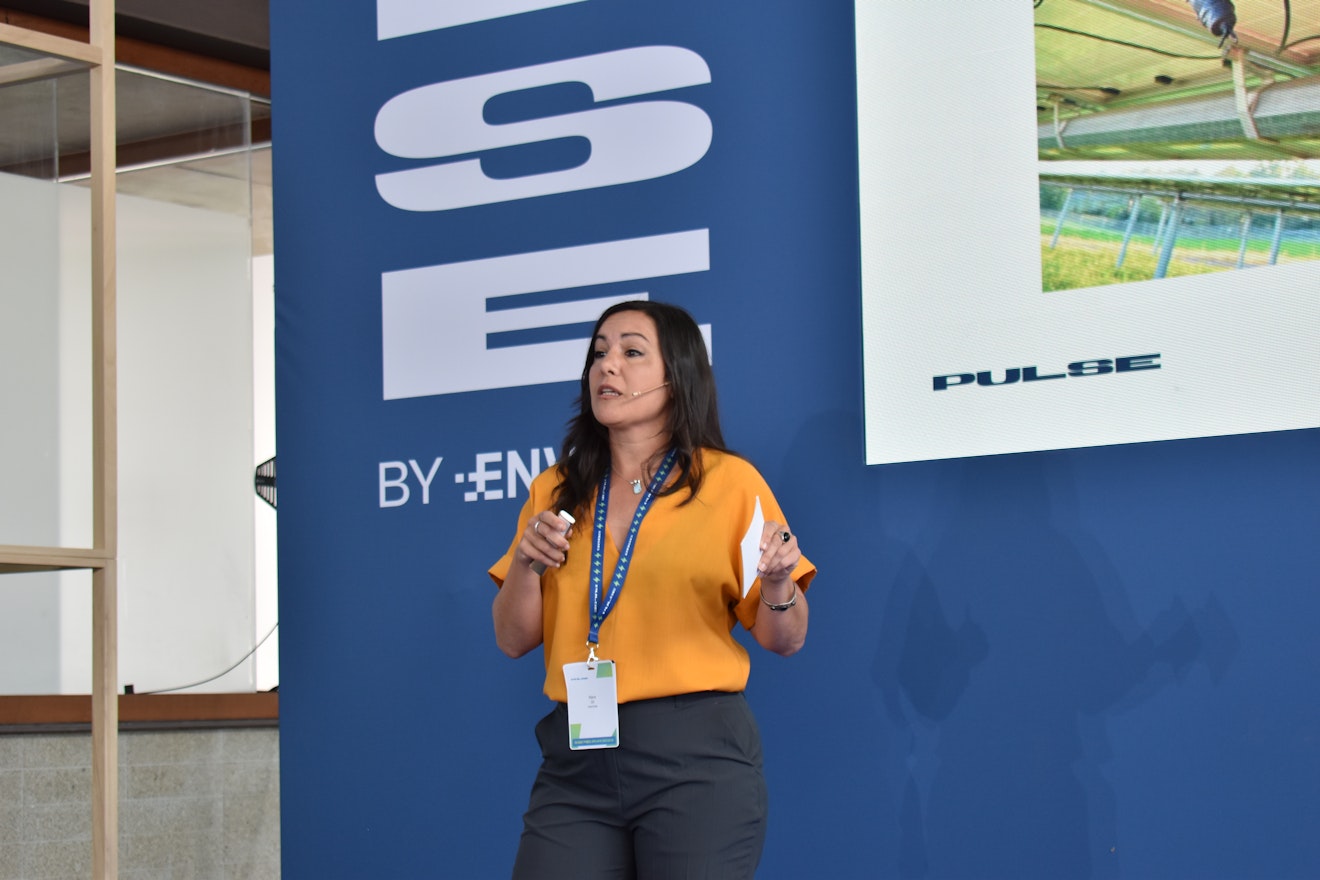
Data integrity and intelligence featured prominently in the late‑morning sessions. Ángela del Carmen, CEO of Imageryst, delivered “Earth Observation for Energy: Practical KPIs Across the Asset Lifecycle,” showing how satellite imagery, empowered by AI, is becoming an operational layer for energy projects. The session walked through real‑world use cases supporting decisions from early development and due diligence through construction monitoring and long‑term O&M, highlighting how auditable, satellite-derived KPIs can reduce uncertainty and accelerate decision‑making.
In a practical workshop, Matteo Menazzi demonstrated how generative AI can be used to customize RatedPower’s documentation to fit specific project examples and regional standards. By combining targeted prompts with automation, the session showed how teams can adapt outputs to local requirements more efficiently, sparking new ways to use AI creatively while saving time.
The focus on data quality continued with Masaaki Hasegawa’s session, “Can You Trust Your Solar Data? Why Data Quality Matters.” Against a backdrop of climate‑driven disasters, grid congestion, curtailment, and increasingly negative electricity prices, the session underscored how project profitability has become more sensitive than ever to Performance Ratio and operational quality.

From data to profit and grid compliance
The agenda then moved toward real‑time asset management and compliance. Samih Kalakeche presented “From Data to Profit: Managing Renewable Assets in Real Time,” showcasing how NUO connects monitoring, performance analytics, and revenue visibility into a single platform.
By linking operational data directly with financial outcomes, the session demonstrated how asset managers and investors can move from reactive monitoring to proactive, profit‑driven management.
In a technical workshop, Álvaro Benito presented “Driving Grid Compliance: Proof of Concept in RatedPower.” The session explored how grid-compliance features for PV and BESS projects could be implemented in RatedPower, outlining the conceptual approach, software integration steps, and the current limitations of the prototype. Real-world examples illustrated how compliance‑oriented design can improve reliability while simplifying regulatory processes.
This was followed by Juliette Rognard who examined how AI agents are reshaping O&M and asset management. Her talk highlighted how AI‑driven systems can improve efficiency, transparency, and cost control, enabling asset owners to move beyond today’s operational status quo and achieve stronger, data‑backed returns across renewable portfolios
The afternoon concluded with a diverse set of perspectives. Daniel Oliveira delivered “The Physics of Solar Cells,” grounding the day in fundamentals by exploring the photoelectric effect and the physical principles governing how photons release electrons. The session connected foundational science with the engineering challenges driving renewable innovation.
The afternoon concluded with a diverse set of perspectives. Daniel Oliveira delivered “The Physics of Solar Cells,” grounding the day in fundamentals by exploring the photoelectric effect and the physical principles governing how photons release electrons. The session connected foundational science with the engineering challenges driving renewable innovation.
Alongside this, there were strategic reflections in “Adopting the ‘Smart IPP’ Mindset” by Miklós Mormer who addressed how IPPs and storage operators must adapt to increasingly dynamic markets. Followed by “Riding the Ever‑Evolving Battery Storage Revenue Rollercoaster” by José Manuel Menéndez, who discussed how BESS is developing within an ever-changing market with a focus on how the Spanish landscape is evolving.
The Energy Trilemma Revisited
Day 2 closed with Bernadette Johnson’s keynote, “The Energy Trilemma 2.0: Balancing Reliability, Sustainability, and Energy Equity.” Against a backdrop of significant load growth and rising grid complexity, the session examined how the power and renewables industry can ensure reliability while balancing sustainability goals and rate‑payer costs. The talk brought together the technical, financial, and societal threads explored throughout the day, offering a forward‑looking view of the challenges and trade‑offs shaping the future of the energy system.
Closing Reflections on PULSE 2026
As PULSE 2026 came to a close, the two‑day event offered a clear snapshot of a sector in transition, moving from rapid expansion toward integration, optimization, and system‑level thinking. Across both days, discussions went beyond individual technologies to consider how renewable energy can be planned, financed, and operated within increasingly interconnected power systems.
Read the full 2026 Solar Trends Report!
Explore the key renewable energy trends shaping 2026 — from grid constraints and hybrid solar to storage, digitalization, and shifting regional markets.


Latest stories
Related posts
Product and corporate updates
Goodbye guesswork with automated earthwork calculations
Automated earthwork calculations flag costly grading risk before construction. See real project savings and get RatedPower's calculation methodology.
Updated 15 SEP, 26

Product and corporate updates
How preliminary grouping decisions shape execution costs
Why do solar layout rework problems keep appearing in detailed engineering? The answer usually comes back to electrical grouping. Here is how to get it right from the start.
Updated 8 JUL, 26

Product and corporate updates
PRISM: Discovering Land for Solar Growth in Australia
Learn about the planning, zoning, and grid access issues slowing clean energy development in Australia, and how federal and state programs are working to help.
Updated 26 MAY, 26