Watch a demo
Red tape vs. renewable goals: How Solarpaket II aims to unblock Germany’s solar future
Discover what derailed Germany’s solar rollout under Solarpaket I, and how Solarpaket II aims to cut red tape, boost incentives, and unlock energy-sharing models.



Julian Scheer
Customer Success Manager
As a Principal Consultant at RatedPower, Julian Scheer is responsible for directly supporting clients throughout different markets. With his background in Heat and Power Engineering he is passionate about tackling climate related challenges both technically and from a behavioral perspective. For him transforming the Energy System of today is critical to ensure a more sustainable future!

Content
Intended to fast-track solar projects and free up space for wind farms, Germany’s Solarpaket I debuted in 2024 to a wave of scrutiny. Analysts warned that it left several structural issues unresolved and, in some cases, created new ones. Lawmakers have therefore continued working on a follow‑up reform round to close off those loose ends.
A year later, the conversation has moved on. Developers are now grappling less with high-level solar policy and more with the realities of grid congestion, evolving EEG rules, and a wave of overlapping reforms, from the Solarspitzengesetz and ongoing EEG amendments to grid-focused initiatives like the Netzpaket and new prioritisation approaches such as the Reifegradverfahren. In that context, the follow‑up reform, often referred to as Solarpaket II, can be seen less as setting the overall direction, and more as an attempt to keep solar development attractive and provide a positive push, even as the industry faces a growing set of new challenges.
Its role is practical: for larger PV projects, shorten approval and grid‑connection bottlenecks; and for multi‑unit or community‑scale setups, make shared self‑consumption models simpler to run in practice.
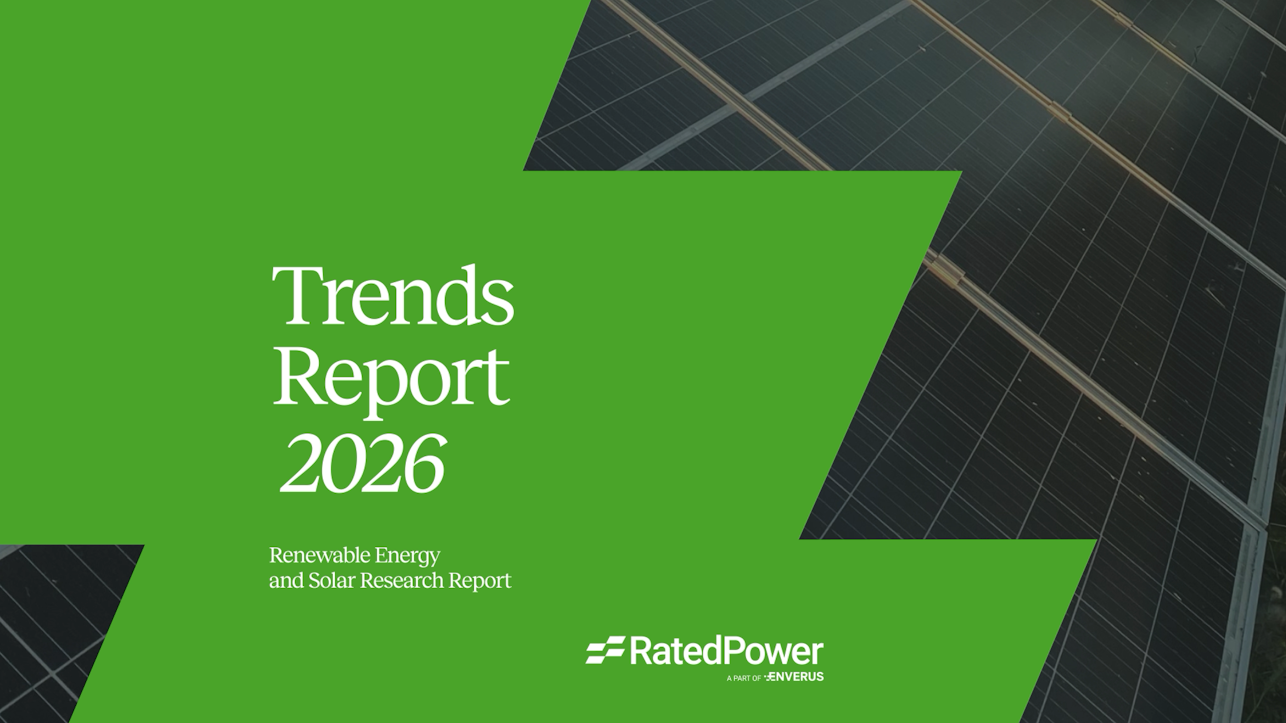
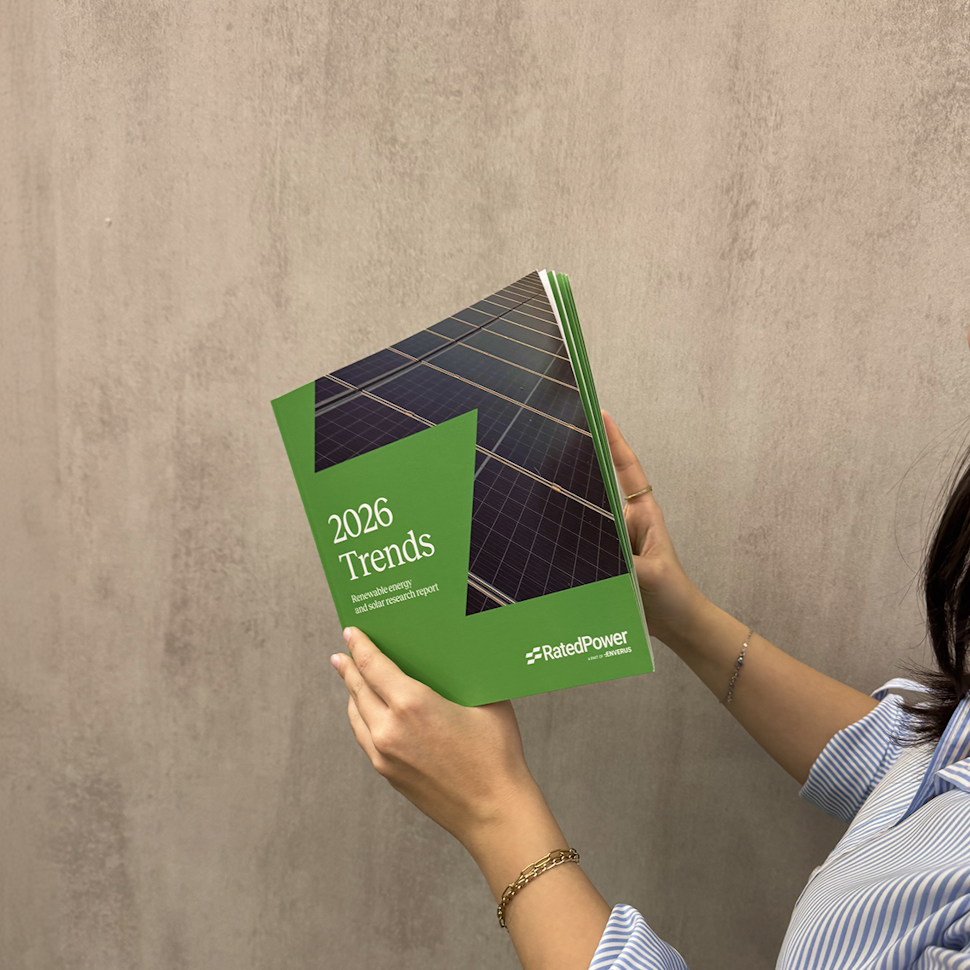
The 2026 Trends Report reviews the solar sector’s performance last year and examines future influences. It draws on industry perspectives and real project data. The report explores grid constraints, permitting, hybridization, and digitalization. Download to examine these findings in detail.

The stakes are high. Germany’s solar fleet is already large, with 2025 additions pushing cumulative capacity well past the 100‑GW mark, and the next phase of growth depends less on “more panels” and more on whether regulation makes projects bankable, grid‑compatible, and fast to connect.
Will the next reform round put Germany’s renewable rollout back on steadier ground? Below, we break down what went wrong under Solarpaket I, and where the newest proposals are trying to correct the course.
What went wrong with Solarpaket I
1) Support uncertainty: key measures remain stuck in state‑aid limbo
Solarpaket I introduced higher support levels for certain segments, but a core problem remains: some changes still hinge on EU state‑aid clearance. In its latest published EEG rates, Germany’s Bundesnetzagentur explicitly notes that the Solarpaket I uplift (including the +1.5 ct/kWh increase referenced for some systems) is not yet legally effective until European Commission approval is granted. That leaves developers and financiers with avoidable revenue uncertainty in precisely the segments where clarity matters most: larger rooftop and commercial-scale PV.
2) System stability: deployment accelerated faster than integration
Energy economists and grid stakeholders have also criticised Solarpaket I for being heavy on deployment and lighter on system integration. That concern has only grown with the rise of midday oversupply and negative prices, the exact issue targeted by the Solarspitzengesetz, which tightened remuneration conditions during periods of very high PV generation and negative wholesale prices. For developers, this shifts the economics: value increasingly depends on controllability, self-consumption, and storage dispatch, not just installed capacity.
3) Grid connection remains the main choke point
Permitting gets the headlines, but connection queues often decide whether projects move. German law already sets expectations for grid operators: guidance summarising the EEG framework points to obligations to provide a clear process timeline and deliver results of grid compatibility checks within defined windows once required information is provided. In practice, developers still report long waits and inconsistent handling, one reason “digital-first” grid processes keep reappearing in reform discussions.
4) Land-use clarity is still patchy for “nature-friendly” models
Solarpaket I opened doors for innovative PV types, but many developers still cite slow, multi-stage approvals for agri‑PV and biodiversity‑PV projects. The bigger blocker is rarely “whether” these projects can be permitted, but how predictably authorities apply ecological standards and timelines across regions.

Enter Solarpaket II: A new push for reform
Solarpaket II discussions are largely shaped by the barriers developers flag most often: remuneration uncertainty, grid delays, storage disincentives, and administrative overhead. The policy direction also aligns with broader EU shifts: more long‑term contracting tools, more flexibility, and fewer stop‑start auction tweaks.
Rebuilding manufacturing resilience (without re‑inventing national targets)
Solarpaket II is also being discussed alongside the EU’s industrial push, where the Net‑Zero Industry Act (NZIA) sets an EU-level objective for domestic production capacity across key clean technologies. The point for German solar is less “industrial policy as an add‑on” and more “stable demand and clear rules,” the conditions manufacturers need to plan capacity.
More stable support design: the EU is nudging markets toward long-term tools
Another tailwind is the EU electricity market reform and related guidance pushing Member States toward long-term contracts (including two‑way contracts for difference) as the default for new support schemes, with the intent of reducing volatility and protecting consumers from windfall effects. The European Commission’s guidance on two‑way CfDs (late 2025) reinforces that policy direction.
Storage moves from “nice-to-have” to essential
Storage, which hardly featured in Solarpaket I, is now central to the system-integration debate. The Solarspitzengesetz signals why: when negative price periods increasingly matter for remuneration and market value, batteries and controllability can determine whether a PV asset is resilient or exposed.
Cutting red tape, boosting incentives, but with new market realities
Solarpaket II aims to strip back procedural drag so solar can be installed, registered, and connected faster, especially for rooftop and small commercial systems. However, “faster” now sits alongside a new reality: the growth constraint is not only bureaucracy; it’s how well assets can operate under tighter grid and pricing conditions.
That’s also why the grid‑operator workflow matters so much. The EEG framework expects network operators to communicate clearly on steps and timelines and to provide grid-compatibility outcomes within defined periods once required data is complete — an important baseline for any “approval by default” discussion.

How RatedPower can help target customers adapt
As Germany shifts from “install more PV” to “integrate PV reliably,” developers and C&I owners need to prove projects work under tighter grid and market conditions, not just on paper, but in operational reality. RatedPower supports solar and hybrid developers by helping teams move faster from feasibility to bankable design decisions.
For utility‑scale and large C&I portfolios, teams can compare layout options, quantify yield impacts, and stress‑test performance assumptions earlier, reducing rework when projects hit permitting or grid‑study iterations. As negative-price risk and curtailment events become more material, developers also benefit from designing with controllability in mind (export limits, clipping trade-offs, and the role of storage).
For shared building supply and emerging energy community models, RatedPower can support the technical side of decision-making: sizing PV and storage, estimating generation profiles against on‑site demand patterns, and evaluating scenarios that prioritise self‑consumption rather than pure export. This is especially relevant as new rules increase the value of flexibility and make “when you inject” nearly as important as “how much you generate.”
How is PV & Storage reshaping C&I solar projects across MENA? Listen back to RatedPower and Solis Depot on Sept 17 for a 45‑minute webinar exploring market trends, grid challenges, and growth opportunities beyond Saudi Arabia. Discover how the right simulation tools simplify storage and speed proposals.
Why it matters for Europe’s energy future
Solarpaket II won’t solve every issue raised after Solarpaket I, but it reflects a broader European shift: renewable growth now depends on integration, flexibility, and durable market design, not just faster installation.
At the EU level, the revised Renewable Energy Directive raises the binding 2030 renewable energy target to at least 42.5% (with an aspiration of 45%). As the bloc’s largest emitter, Germany’s ability to scale solar while keeping the grid stable has an outsized influence on whether Europe hits that target on time.
And if Germany can make shared-energy growth predictable, it creates steadier demand signals, the kind manufacturers and investors need to plan long-term capacity and support the EU’s industrial goals.
Read the full 2026 Solar Trends Report!
Explore the key renewable energy trends shaping 2026 — from grid constraints and hybrid solar to storage, digitalization, and shifting regional markets.

Latest stories
Related posts
Market analysis
DACH BESS: shield solar revenue from negative prices
Explore how BESS can help German solar developers manage negative-price exposure, and compare early-stage PV-plus-storage designs with RatedPower.
Updated 22 SEP, 26

Market analysis
Curtailment is now a design constraint in Iberia: here's why
Solar curtailment in Spain is now a design constraint. Download RatedPower's Iberia curtailment playbook and model PV and BESS layouts before you build.
Updated 8 SEP, 26


Market analysis
Why grid-aware design is now critical for solar and BESS project economics in Australia
Grid constraints now shape BESS project development in Australia. Download RatedPower's BESS Design Handbook for a full sizing and dispatch framework.
Updated 1 SEP, 26